Ecommerce Conversion Rate Optimization: The On-Site Wins You Can Ship This Week
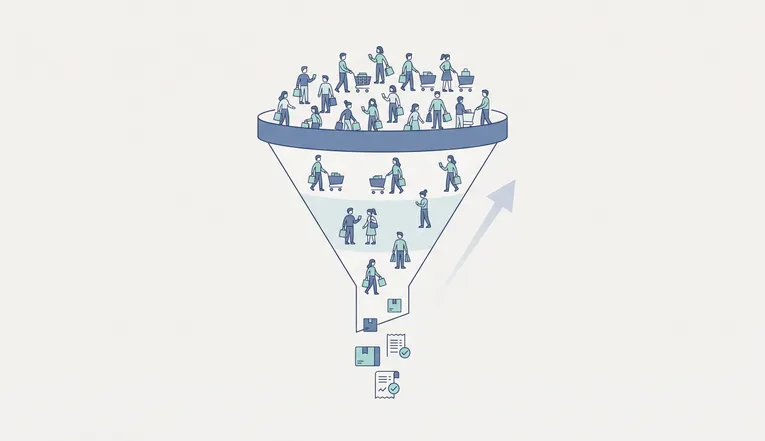
You already paid to bring visitors to your web shop. Most of them leave without buying. That gap between traffic and revenue is the entire argument for conversion rate optimization, and it is wider than most teams realise.
IRP Commerce measured an average ecommerce conversion rate of 2.22% across its merchant base in July 2026, up from 1.91% a year earlier. The spread underneath that average is enormous: in the same dataset, Arts and Crafts stores converted at 5.23% while Baby and Child stores converted at 0.55%. So the useful benchmark is never the global average. It is your own store's rate last month.
Most guides on ecommerce conversion rate optimization respond to that gap by handing you a six-month program of heatmaps, hypotheses, and structured testing. That work is real and it matters. But if you run a small team, you do not have to start there. Some of the highest-return CRO wins are on-site messaging changes you can ship this week without a developer.
This post covers those first, then the slower structural work worth planning properly.
What Is Ecommerce Conversion Rate Optimization?
Ecommerce conversion rate optimization is the practice of increasing the share of visitors to your online store who complete a valuable action, without increasing what you spend to bring them in.
That action is usually a completed order. But depending on where the visitor sits in the funnel, it might be an add to cart, an email signup, or a back-in-stock request. Defining it precisely matters, because you cannot optimise a number you have not agreed on.
The arithmetic is what makes CRO compelling. If your store converts 2% and you lift it to 3%, you have increased revenue by 50% on the same traffic and the same ad spend. Operators who do this well treat CRO as the first lever, because it makes every visitor from SEO and paid acquisition more valuable.
Why CRO Beats Buying More Traffic
Buying traffic has a ceiling and a rising price. Every new visitor costs more than the last as you scale a channel, and you still lose the same share at checkout. IRP Commerce recorded average cost per acquisition rising from 8.41% to 9.64% of revenue year on year, while cost per session climbed from £0.11 to £0.16.
CRO works on the other side of that equation. A one-point improvement in conversion rate flows straight to revenue with no added acquisition cost, and unlike a paid campaign it does not switch off when you stop paying. The improvement compounds against all your future traffic.
For a small web shop with limited time, that makes CRO the highest-leverage place to spend it. The question is only where to start.
The CRO Wins a Small Team Can Ship This Week
These are on-site messaging levers. None of them requires redesigning your store or standing up a testing program, and each one addresses a specific, common leak.
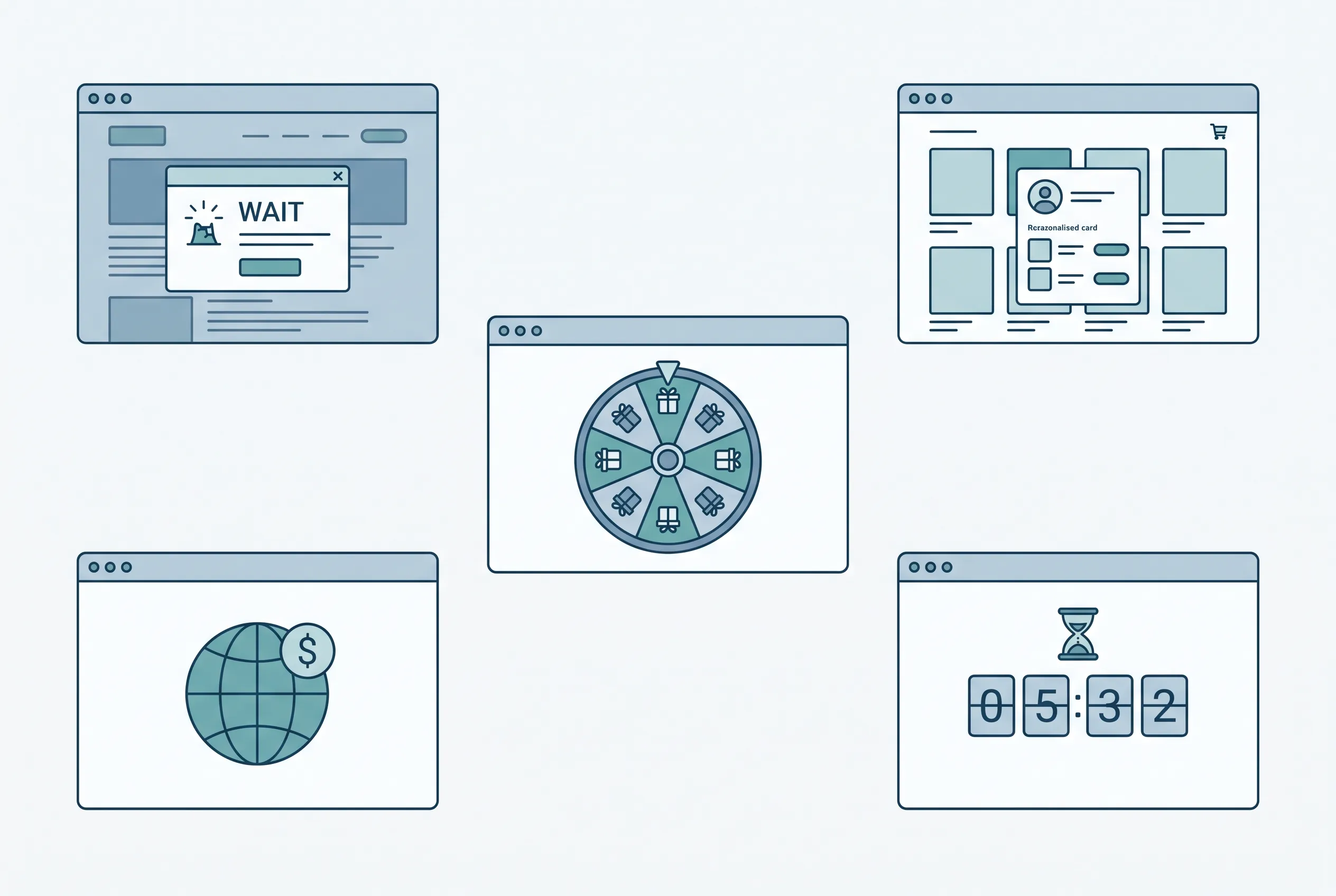
Recover Abandoned Carts In-Session
The Baymard Institute puts the average documented cart abandonment rate at 70.22%, calculated across 50 separate studies. Seven in ten people who add something to a cart leave without buying it.
Some of that is unavoidable. Baymard's own research found 42% of US online shoppers have abandoned a cart simply because they were browsing and not ready to buy. But the rest is addressable, and an on-site message that fires on exit intent catches shoppers before they leave. That is cheaper than the follow-up email and recovers a share of people who would never have opened it. Our guide to exit intent on mobile covers the timing details, which matter more on phones than most teams expect.
The key is to target the offer rather than discount everyone, which we break down step by step in our guide to the abandoned cart popup.
Match the Offer to the Visitor
A first-time visitor and a repeat customer are worth different messages. Showing them the same generic offer wastes your best conversion slots.
With a tool that reads live CRM segments, you can show different offers to different audiences: a capture offer for new visitors, early access for VIPs, a win-back for lapsed customers. This is the point where personalisation stops being a buzzword and becomes a measurable lift, because the segmentation logic already exists in your email platform. You are just extending it to the website.
Capture the Visitors Who Are Not Ready to Buy
Not everyone converts on the first visit, and losing their email means losing them entirely. A well-placed capture campaign, or a gamified popup such as a spin-to-win, turns a bounce into a contact you can convert later through your existing flows.
Interactive capture formats tend to outperform a flat "sign up for 10% off" box, partly because they ask for participation before they ask for an email address. They also collect zero-party data you can segment on later.
Show the Right Currency and Shipping to the Right Region
If you sell across markets, a visitor who sees the wrong currency or unclear shipping terms hesitates. This is not a small problem: IRP Commerce found international sales made up 42.27% of ecommerce revenue in July 2026.
A geo-targeted message showing local currency, shipping promises, or a region-specific offer removes that friction at the exact moment it appears, without touching your store's underlying localisation setup.
Add Urgency Where It Is True
A countdown on a genuine, time-limited promotion nudges shoppers who are close but stalling. The word "genuine" is doing a lot of work in that sentence. Fake urgency erodes trust and costs you more over time than the short-term lift is worth, which is a principle we cover in more depth in our note on ethical marketing.
Together these five changes address the leaks that lose the most sales: cart abandonment, generic offers, and lost first-time visitors.
The Slower CRO Work Worth Planning
On-site messaging fixes the capture and recovery leaks fast. The structural work takes longer and deserves a proper plan, because it lifts the baseline everything else builds on.
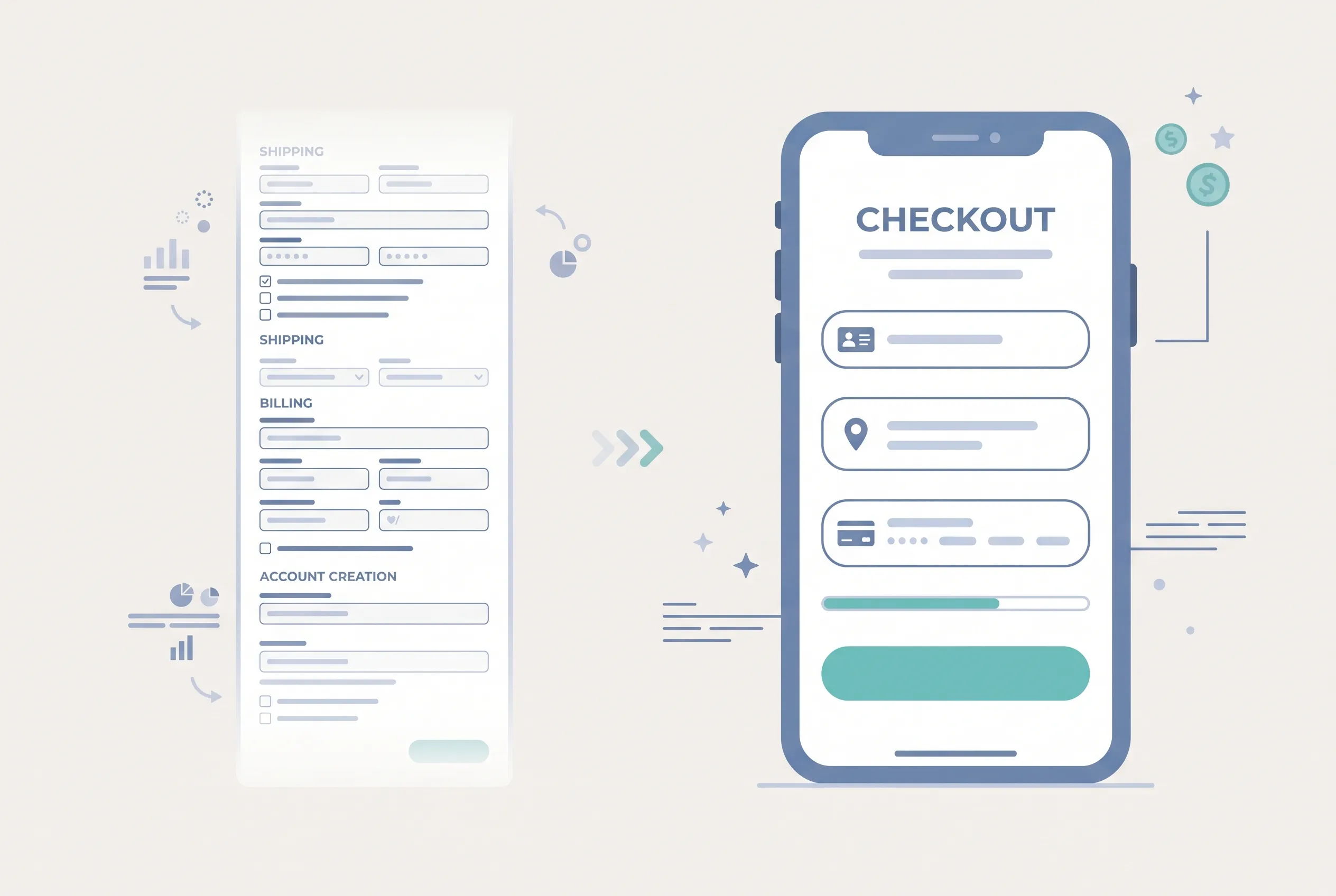
Baymard's data is useful here because it tells you what shoppers actually say. Setting aside the "just browsing" group, the top reasons for abandonment are extra costs being too high at 40%, delivery being too slow at 20%, not trusting the site with card details at 19%, being forced to create an account at 18%, and a checkout that is too long or complicated at 17%.
Costs and delivery. The single largest cause of abandonment is a total that changes at checkout. Showing shipping and tax early, even approximately, costs nothing and removes the surprise.
Checkout length. Baymard found the average US checkout shows 23.48 form elements by default, where an ideal flow can run as short as 12 to 14. Every extra field and every forced account creation loses buyers.
Mobile. Mobile accounted for 62.4% of ecommerce sales in IRP Commerce's July 2026 data, against 36.1% for desktop. A checkout that works well on a phone is not a nice-to-have.
Trust and privacy. Nearly one in five shoppers abandons over card security concerns. Visible trust signals and an honest privacy posture reduce that friction, which is one reason the tools you add to your store should not be creating new data-storage liabilities of their own. We wrote about that trade-off in performance and privacy for sustainable growth.
This is the work a testing program refines over months. Plan it, but do not let it block the fast wins.
Personalisation Is the Next CRO Layer
Once the basics are in place, the ceiling on ecommerce CRO moves from "show a good offer" to "show the right person the right offer." Generic optimization treats every visitor identically. The stores pulling ahead read who is on the page and respond to it.
Fluentos does this by reading live segments from Klaviyo, HubSpot, ActiveCampaign, and Voyado, so your on-site messaging acts on the same intelligence your email program already uses. A VIP, a new visitor, and a lapsed customer each see a message built for them, driven by data you already maintain, without your store having to store anything new.
Tools to Optimize Your Web Shop
You do not need one giant platform. A practical web shop optimization stack has three jobs, and you can fill them without overspending.
Find the leaks. Analytics and behaviour tools show you where visitors drop off. GA4 gives you the funnel for free, and session-replay or heatmap tools show you why people leave a specific page. Start here, because optimising without knowing where the leak is means guessing.
Fix the on-site leaks. This is the messaging layer: cart recovery, segment-aware offers, capture, geo-targeting, urgency. A no-code tool lets a small team ship changes the same day. If you are evaluating options, we compared the field in our guide to the best popup tools for ecommerce conversion optimization, and you can see what Fluentos covers on the features page.
Test and measure. Whatever you change, test it against a control and read the result on conversion, not on impressions. Fluentos reports impressions, events, subscriptions, conversion rates, and A/B results per campaign, so you can tell which variant actually drove signups rather than which one got seen more.
The point is to match the tool to the leak. Analytics finds the problem, on-site messaging fixes the capture and recovery problems, and testing tells you whether it worked.
Measure What Actually Matters
The trap in ecommerce CRO is optimising for the wrong number. Impressions and traffic feel like progress but do not pay.
Track conversion rate, revenue per visitor, and the conversion rate of each specific campaign you run. Break your rate down by traffic source, device, and market, because a blended average hides both the segments where the real problems live and the ones where the real opportunities are.
For a broader set of tactics beyond on-site messaging, our post on effective ecommerce CRO strategies goes deeper on product pages, checkout flow, and site speed. Your only goal each month is to beat your own previous result.
FAQs About Ecommerce Conversion Rate Optimization
What Is a Good Ecommerce Conversion Rate?
IRP Commerce measured an average of 2.22% across its merchant base in July 2026, but the range by vertical ran from 0.55% to 5.23% in the same month. Industry, device mix, and traffic source all move the number substantially, so the only benchmark worth managing against is your own store's rate last month.
What Is the Fastest Way to Improve My Web Shop's Conversion Rate?
On-site messaging changes tend to be fastest to ship and among the highest return for a small team: an exit-intent cart recovery message, segment-matched offers, and capture campaigns for visitors who are not ready to buy. None of these requires a redesign or a developer.
Does CRO Work Better Than Paid Ads?
They do different jobs. Ads buy traffic, CRO converts more of the traffic you already have at no added acquisition cost, and the CRO gains compound. Most operators do both, but CRO first, because it makes the ad spend more profitable.
What Tools Do I Need for Ecommerce CRO?
Broadly three: an analytics or behaviour tool to find where visitors drop off, an on-site messaging tool to fix the capture and recovery leaks, and A/B testing to confirm the changes worked. You can start with free analytics and add from there.
Do Popups Actually Help Conversion Rates?
Yes, when they are targeted. A generic popup firing at every visitor can hurt the experience, but a well-timed, segment-aware campaign recovers carts and captures visitors who would otherwise leave with no trace. The difference is targeting, not the format itself.
Why Do Shoppers Abandon Their Carts?
Baymard Institute's research found that among shoppers who were genuinely intending to buy, 40% cited extra costs being too high, 20% slow delivery, 19% distrust of the site with card details, 18% forced account creation, and 17% a checkout that was too long or complicated.
How Long Does It Take to See CRO Results?
On-site messaging campaigns produce readable data within days on a store with reasonable traffic, since you are measuring against a control. Structural work on checkout, product pages, and site speed takes longer to build and longer to attribute, which is why it is worth running both tracks in parallel.
Should I Discount to Improve Conversions?
Not by default. Discounting everyone trains customers to wait for the offer and compresses your margin on people who would have paid full price. Targeting the discount to the segments that need it, and using non-discount incentives such as early access or free shipping thresholds elsewhere, protects margin while still moving the rate.